








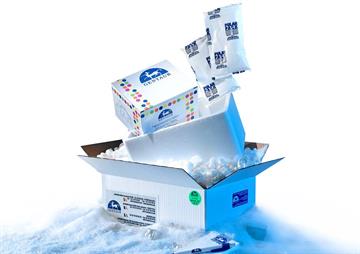
KIT Chemi-Luminescent ELISA Kit (Human) (OKCD03914)
1935.4 EUR
In Stock
quantity
Produktdetaljer
Katalognummer: 247 - OKCD03914
Produktkategori: Företag och industri > Vetenskap och laboratorium
Gentaur
Storlek: 96 Wells
OKCD03914
KIT Chemi-Luminescent ELISA Kit (Human) (OKCD03914)
Description of target: Tyrosine-protein kinase that acts as cell-surface receptor for the cytokine KITLG/SCF and plays an essential role in the regulation of cell survival and proliferation, hematopoiesis, stem cell maintenance, gametogenesis, mast cell development, migration and function, and in melanogenesis. In response to KITLG/SCF binding, KIT can activate several signaling pathways. Phosphorylates PIK3R1, PLCG1, SH2B2/APS and CBL. Activates the AKT1 signaling pathway by phosphorylation of PIK3R1, the regulatory subunit of phosphatidylinositol 3-kinase. Activated KIT also transmits signals via GRB2 and activation of RAS, RAF1 and the MAP kinases MAPK1/ERK2 and/or MAPK3/ERK1. Promotes activation of STAT family members STAT1, STAT3, STAT5A and STAT5B. Activation of PLCG1 leads to the production of the cellular signaling molecules diacylglycerol and inositol 1,4,5-trisphosphate. KIT signaling is modulated by protein phosphatases, and by rapid internalization and degradation of the receptor. Activated KIT promotes phosphorylation of the protein phosphatases PTPN6/SHP-1 and PTPRU, and of the transcription factors STAT1, STAT3, STAT5A and STAT5B. Promotes phosphorylation of PIK3R1, CBL, CRK (isoform Crk-II), LYN, MAPK1/ERK2 and/or MAPK3/ERK1, PLCG1, SRC and SHC1.1;Species reactivity: Human;Application: ;Assay info: Assay Methodology: Quantitative Sandwich ELISA;Sensitivity: 0.0412 ng/mL
1935.4 €
OKCD03912
KITLG Chemi-Luminescent ELISA Kit (Human) (OKCD03912)
Description of target: Ligand for the receptor-type protein-tyrosine kinase KIT. Plays an essential role in the regulation of cell survival and proliferation, hematopoiesis, stem cell maintenance, gametogenesis, mast cell development, migration and function, and in melanogenesis. KITLG/SCF binding can activate several signaling pathways. Promotes phosphorylation of PIK3R1, the regulatory subunit of phosphatidylinositol 3-kinase, and subsequent activation of the kinase AKT1. KITLG/SCF and KIT also transmit signals via GRB2 and activation of RAS, RAF1 and the MAP kinases MAPK1/ERK2 and/or MAPK3/ERK1. KITLG/SCF and KIT promote activation of STAT family members STAT1, STAT3 and STAT5. KITLG/SCF and KIT promote activation of PLCG1, leading to the production of the cellular signaling molecules diacylglycerol and inositol 1,4,5-trisphosphate. KITLG/SCF acts synergistically with other cytokines, probably interleukins. ;Species reactivity: Human;Application: ;Assay info: Assay Methodology: Quantitative Sandwich ELISA;Sensitivity: 31.2 pg/mL
1935.4 €
OKCD03889
PRL Chemi-Luminescent ELISA Kit (Human) (OKCD03889)
Description of target: ;Species reactivity: Human;Application: ;Assay info: Assay Methodology: Quantitative Sandwich ELISA;Sensitivity: 0.41 ng/mL
1935.4 €
OKCD03986
TNF Chemi-Luminescent ELISA Kit (Human) (OKCD03986)
Description of target: Cytokine that binds to TNFRSF1A/TNFR1 and TNFRSF1B/TNFBR. It is mainly secreted by macrophages and can induce cell death of certain tumor cell lines. It is potent pyrogen causing fever by direct action or by stimulation of interleukin-1 secretion and is implicated in the induction of cachexia, Under certain conditions it can stimulate cell proliferation and induce cell differentiation. Impairs regulatory T-cells (Treg) function in individuals with rheumatoid arthritis via FOXP3 dephosphorylation. Upregulates the expression of protein phosphatase 1 (PP1), which dephosphorylates the key 'Ser-418' residue of FOXP3, thereby inactivating FOXP3 and rendering Treg cells functionally defective . Key mediator of cell death in the anticancer action of BCG-stimulated neutrophils in combination with DIABLO/SMAC mimetic in the RT4v6 bladder cancer cell line .;Species reactivity: Human;Application: ;Assay info: Assay Methodology: Quantitative Sandwich ELISA;Sensitivity: 0.14 pg/mL
1935.4 €
OKCD04003
TXN Chemi-Luminescent ELISA Kit (Human) (OKCD04003)
Description of target: Participates in various redox reactions through the reversible oxidation of its active center dithiol to a disulfide and catalyzes dithiol-disulfide exchange reactions. Plays a role in the reversible S-nitrosylation of cysteine residues in target proteins, and thereby contributes to the response to intracellular nitric oxide. Nitrosylates the active site Cys of CASP3 in response to nitric oxide (NO), and thereby inhibits caspase-3 activity. Induces the FOS/JUN AP-1 DNA-binding activity in ionizing radiation (IR) cells through its oxidation/reduction status and stimulates AP-1 transcriptional activity. ADF augments the expression of the interleukin-2 receptor TAC (IL2R/P55). ;Species reactivity: Human;Application: ;Assay info: Assay Methodology: Quantitative Sandwich ELISA;Sensitivity: 0.00549 ng/mL
1935.4 €
Håll dig uppdaterad! Visa tidigare publikationer

By: Author , 2 Comment
Anaplasmos hos hundar och katter – allt du behöver veta
23 August 2025

By: Author , 2 Comment
Solbränna – hur leker man säkert i solen?
16 August 2025

By: Author , 2 Comment
Biologiska läkemedel – Modernitet inom farmaci
1 August 2025

By: Author , 2 Comment
Icke-steroida antiinflammatoriska läkemedel – viktig information om populära läkemedel
22 July 2025