








Human Ovarian Fibroblasts
0.01 EURAsk for quotation
On request
quantity
Produktdetaljer
Katalognummer: 870 - ABC-TC3741
Produktkategori: Företag och industri > Vetenskap och laboratorium
Gentaur
Storlek: 1 vial
Parameters
| Additional information | For research use only |
|---|---|
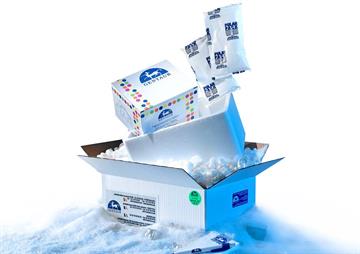
| Storage and shipping | Liquid Nitrogen |
ABC-TC3741
Human Ovarian Fibroblasts
Fibroblasts are mesenchymal cells derived from the embryonic mesoderm. They have been extensively used for a wide range of cellular and molecular studies. This is mainly because they are one of easiest types of cells to grow in culture, and their durability makes them amenable to a wide variety of manipulations ranging from studies employing gene transfection to microinjection. There is good evidence that fibroblasts in different parts of the body are intrinsically different. Fibroblasts within tissues are exposed to a dynamic mechnical environment, which influences the structure integrity of both healthy and healing soft tissue. Fibroblasts secrete a nonrigid extracellular matrix that is rich in type I and/or type III collagen. Ovarian fibroblasts stimulate human ovarian cancer cell invasion and expression of 72-kDa gelatinase A (MMP-2).HOF from Gentaur Research Laboratories are isolated from human ovary tissue. HOF are cryopreserved at primary culture and delivered frozen. Each vial contains 5×10^5 cells in 1 ml volume. HOF are characterized by their spindle morphology and immunofluorescent method with antibody to fibronectin. HOF are negative for HIV-1, HBV, HCV, mycoplasma, bacteria, yeast and fungi. HOF are guaranteed to further expand for 15 population doublings at the condition provided by Gentaur Research Laboratories.
Ask for quotation
ABC-TC5542
Human Ovarian Serous Tumor Carcinoma Associated Fibroblasts
Serous carcinoma is a type of epithelial ovarian cancer, which is the most common kind of ovarian cancer. It is arises from the lining of a cavity that produces a serum-like fluid (a serous cavity).Carcinoma associated fibroblasts (CAFs) have recently been implicated in important aspects of epithelial solid tumor biology such as neoplastic progression, tumor growth, angiogenesis, and metastasis.Product is manufactured, tested and validated in an ISO 9001/ISO13485/CLIA certified facility.
Ask for quotation
ABC-TC4187
Rat Ovarian Fibroblasts
Rat Primary Ovarian Fibroblasts from Gentaur are isolated from tissue of adult Sprague-Dawley Rats. Rat Primary Ovarian Fibroblasts are grown in T75 tissue culture flasks pre-coated with gelatin-based solution for 0.5 hour and incubated in Gentaur's Cell Culture Medium for 3-7 days. Cultures are then expanded. Prior to shipping, cells are detached from flasks and immediately cryo-preserved in vials. Each vial contains at least 1x10^6 cells per ml and is delivered frozen.Cells are negative for bacteria, yeast, fungi, and mycoplasma. Rat Primary Ovarian Fibroblasts are tested for expression of marker using the antibody of anti-FSP1/S100A4 by immunofluorescence staining and can be expanded by 3-5 passages at a split ratio of 1:2 under the cell culture conditions specified by Gentaur. Repeated freezing and thawing of cells is not recommended.Standard biochemical procedures performed with fibroblast cultures include the assays of cell to cell interaction, PCR, Western blotting, immunoprecipitation, immunofluorescent staining, immunofluorescent flow cytometry or generating cell derivatives for desired research applications.
Ask for quotation
ABC-TC3478
Human Adrenal Fibroblasts
The adrenal gland plays an essential role in regulating homeostasis in the body through the secretion of corticosteroid and androgen hormones. Fibroblasts are mesenchymal cells derived from the embryonic mesoderm. They have been extensively used for a wide range of cellular and molecular studies. This is mainly because they are one of easiest types of cells to grow in culture, and their durability makes them amenable to a wide variety of manipulations ranging from studies employing gene transfection to microinjection. Fibroblasts secrete a non-rigid extracellular matrix that is rich in type I and/or type III collagen. They are responsible for much of the synthesis of extracellular matrix in connective tissues and play major roles in wound healing. Many diseases are associated with fibroblasts, either because fibroblasts are implicated in their etiology or because of the fibrosis that accompanies damage to other cell types in tissues. For example, the development of bowl stenosis in Crohn’s disease patients is caused by extreme fibroblast proliferation and extracellular matrix expansion.HAdF from Gentaur Research Laboratories are isolated from human adrenal tissue. HAdF are cryopreserved at passage one and delivered frozen. Each vial contains 5×10^5 cells in 1 ml volume. HAdF are characterized by their spindle morphology and immunofluorescence with antibody specific to fibronectin. HAdF are negative for HIV-1, HBV, HCV, mycoplasma, bacteria, yeast and fungi. HAdF are guaranteed to further expand for 15 population doublings under the conditions provided by Gentaur Research Laboratories.
Ask for quotation
ABC-TC3533
Human Cardiac Fibroblasts
The cardiac fibroblasts (CF) are the principal cell type of the heart. They provide structural support for cardiac myocytes and are responsible for extracellular matrix synthesis in the heart during growth and pathophysiological conditions. CF are an important cellular component of myocardial responses to injury and the source of paracrine growth factors. Their proliferation and synthesis of matrix is essential for scar formation at sites of myocardial infarction, cardiac fibrosis, and is often complicated by cardiac hypertrophy. CF also respond to changing environments in pathophysiological conditions by modulating integrin expression. CF culture has been widely used as a model to study the cardiac matrix remodeled by physiological (exercise) and pathological (hypertension) stressors.HCF from Gentaur Research Laboratories are isolated from the human heart. HCF-a are cryopreserved at secondary culture and delivered frozen. Each vial contains 5×10^5 cells in 1 ml volume. HCF-a are characterized by immunofluorescent method with antibody to fibronectin. HCF-a are negative for HIV-1, HBV, HCV, mycoplasma, bacteria, yeast and fungi. HCF-a are guaranteed to further expand for 15 population doublings at the condition provided by Gentaur Research Laboratories.
Ask for quotation
Håll dig uppdaterad! Visa tidigare publikationer

By: Author , 2 Comment
Pepsin – vad är det och var finns det?
3 March 2026

By: Author , 2 Comment
Katalas – ett extraordinärt enzym
30 January 2026

By: Author , 2 Comment
Anaplasmos hos hundar och katter – allt du behöver veta
23 August 2025

By: Author , 2 Comment
Solbränna – hur leker man säkert i solen?
16 August 2025