








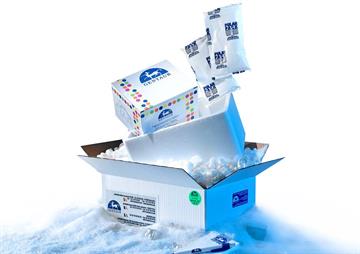
USP2 Inhibitor Screening Assay Kit
0.01 EURAsk for quotation
On request
quantity
Produktdetaljer
Katalognummer: 421 - 78859
Produktkategori: Företag och industri > Vetenskap och laboratorium
Gentaur
Storlek: 96 Reactions
Parameters
| Additional information | Applications: Enzyme kinetic studies and screening small molecule inhibitors for drug discovery and high-throughput screening (HTS) applications.; |
|---|---|
| Storage and shipping | Shipping conditions: -80°C; Storage conditions: This assay kit will perform optimally for up to 6 months from date of receipt when the materials are stored as directed.; |
| Storage and shipping | With |
78840
USP20 Inhibitor Screening Assay Kit
The USP20 Inhibitor Screening Assay Kit is a 96-well format fluorogenic assay designed to measure the activity of the deubiquitinating (DUB) enzyme USP20 for screening and profiling applications. To determine the effect of an inhibitor on USP20 activity, the enzyme should be preincubated with or without the test inhibitor prior to adding the Ub-AMC substrate to the reaction. The assay was functionally validated using Ub-Aldehyde, a potent inhibitor of DUB subfamilies Ubiquitin C-terminal Hydrolases (UCHs), Ubiquitin-Specific Proteases (USPs), Ovarian Tumor Proteases (OTU), and Machado-Josephin Domain (MJD) proteases.Figure 1: Illustration of the assay principle.Ubiquitin-AMC is a fluorogenic substrate for ubiquitin hydrolases based on the C-terminus derivatization of ubiquitin with 7-amido-4-methylcoumarin (AMC) . In the conjugated form, the energy emitted from fluorochrome AMC is quenched. Upon proteolysis, AMC is no longer quenched and emits fluorescence with λexcitation/ λemission maxima of 350/460 nm. The increase in fluorescence is proportional to the DUB activity.Need us to run inhibitor screens or profile your compounds against USP20? Check out ourProtease Screening ServicesorUbiquitination Screening Services.
Ask for quotation
78865
USP14 Inhibitor Screening Assay Kit
The USP14 Inhibitor Screening Assay Kit is a 96-well fluorogenic assay designed to measure the activity of the deubiquitinating (DUB) enzyme USP14 (Ubiquitin specific peptidase 14) for screening and profiling applications. The kit contains enough purified USP14 protein, Ubiquitinated-AMC substrate, and assay buffer for 100 reactions.To determine the effect of an inhibitor on USP14 activity, the enzyme should be preincubated with or without the test inhibitor prior to adding the Ub-AMC substrate to the reaction. The assay was functionally validated using Ub-Aldehyde, a potent inhibitor of DUB subfamilies Ubiquitin C-terminal Hydrolases (UCHs), Ubiquitin-Specific Proteases (USPs), Ovarian Tumor Proteases (OTU), and Machado-Josephin Domain (MJD) proteases.Figure 1: Illustration of the assay principle.Ubiquitin-AMC is a fluorogenic substrate for ubiquitin hydrolases based on the C-terminus derivatization of ubiquitin with 7-amido-4-methylcoumarin (AMC) . In conjugated form, the energy emitted from the fluorochrome AMC is quenched. Upon proteolysis, AMC is no longer quenched and emits fluorescence with λexcitation/λemission maxima of 350/460 nm. The increase in fluorescence is proportional to the DUB activity.Need us to run inhibitor screens or profile your compounds against USP14? Check out ourProtease Screening ServicesorUbiquitination Screening Services.
Ask for quotation
79094
USP10 Inhibitor Screening Assay Kit
The USP10 Inhibitor Screening Assay Kit is a fluorogenic assay designed to measure the activity of the deubiquitinating (DUB) enzyme USP10 (Ubiquitin Specific Peptidase 10) for screening and profiling applications. The kit comes in a convenient 96-well format and contains enough purified recombinant human USP10 protein, Ubiquitinated-AMC substrate, and assay buffer for 100 reactions.To determine the effect of an inhibitor on USP10 activity the enzyme should be preincubated with or without the test inhibitor prior to adding the Ub-AMC substrate to the reaction. The assay was functionally validated using Ub-Aldehyde, a potent inhibitor of DUB subfamilies Ubiquitin C-terminal Hydrolases (UCHs), Ubiquitin-Specific Proteases (USPs), Ovarian Tumor Proteases (OTU) and Machado-Josephin Domain (MJD) proteases.Figure 1: Illustration of the assay principle.Ubiquitin-AMC (Ub-AMC) is a fluorogenic substrate for ubiquitin hydrolases, based on the C-terminus derivatization of ubiquitin with 7-amido-4-methylcoumarin (AMC) . In the conjugated form the energy emitted from the fluorochrome AMC is quenched. Upon release from Ub, AMC emissions are no longer quenched and fluorescence with λexcitation/λemission maxima of 350/460 nm is emitted. The increase in fluorescence is proportional to the DUB activity.Need us to run inhibitor screens or profile your compounds against USP10? Check out ourProtease Screening ServicesorUbiquitination Screening Services.
Ask for quotation
82516
Diablo:XIAP Inhibitor Screening Assay Kit
The Diablo:XIAP Inhibitor Screening Assay Kit is an ELISA-based assay designed to measure the binding between Diablo (also named Smac) and E3 ubiquitin-protein ligase XIAP (X-linked inhibitor of apoptosis, also known as mammalian IAP homolog A) for screening and profiling applications. The Diablo:XIAP Inhibitor Screening Assay Kit comes with enough purified Diablo (amino acids 56-239) and XIAP proteins, primary and secondary antibody, assay buffer, and detection reagent for 100 enzyme reactions.Figure 1. Diablo:XIAP Binding Chemiluminescent Assay Kit schematic.A 96-well plate is coated with purified Diablo protein. After coating and blocking, XIAP is added in an optimized assay buffer. Next, unbound XIAP is washed away and the plate is incubated with a primary antibody, followed by a secondary HRP-conjugated antibody. Finally, ELISA ECL substrate is added to produce chemiluminescence that can be measured using a chemiluminescence reader. The chemiluminescence signal is proportional to the binding of XIAP to Diablo.Need us to run inhibitor screens or profile your compounds against Diablo:XIAP binding? Check out ourUbiquitination Screening and Profiling Service.
Ask for quotation
32513
BRD3 (BD1) Inhibitor Screening Assay Kit
The BRD3 (BD1) Inhibitor Screening Assay Kit is designed to measure the inhibition of BRD3 bromodomain 1 (BD1) from binding to its substrate. The key to the BRD3 (BD1) Inhibitor Screening Assay Kit is the highly specific binding of the BRD3 bromodomain 1 to the acetylated histone substrate. With this kit, only three simple steps on a microtiter plate are required. First, a sample containing BRD3 bromodomain 1 and an inhibitor of choice is incubated with the biotinylated substrate for thirty minutes. Next, acceptor beads are added, then donor beads, followed by reading the Alpha-counts.
915 €
Håll dig uppdaterad! Visa tidigare publikationer

By: Author , 2 Comment
Katalas – ett extraordinärt enzym
30 January 2026

By: Author , 2 Comment
Anaplasmos hos hundar och katter – allt du behöver veta
23 August 2025

By: Author , 2 Comment
Solbränna – hur leker man säkert i solen?
16 August 2025

By: Author , 2 Comment
Biologiska läkemedel – Modernitet inom farmaci
1 August 2025