








HRE Luciferase Reporter Lentivirus
1502.5 EUR
In Stock
quantity
Produktdetaljer
Katalognummer: 421 - 78668
Produktkategori: Företag och industri > Vetenskap och laboratorium
Gentaur
Storlek: 500 µl x 2
Parameters
| Additional information | Applications: Screen for activators or inhibitors of hypoxia-related signaling pathwaysGenerate an HRE luciferase reporter stable cell line (puromycin resistant) following puromycin selection and limiting dilution; |
|---|---|
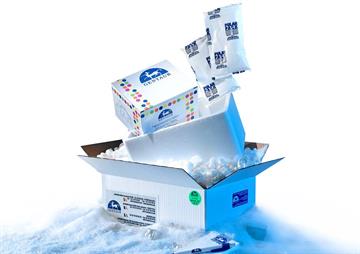
| Storage and shipping | Shipping conditions: -80°C; Storage conditions: Lentiviruses are shipped with dry ice. For long-term storage, it is recommended to store the lentiviruses at -80°C for up to 12 months from date of receipt. Avoid repeated freeze/thaw cycles. Titers can drop significantly with each freeze/thaw cycle.; |
| Storage and shipping | With |
RC1018
HRE Luciferase Reporter-HeLa Cell Line
The HRE Luciferase Reporter cell line is a stably transfected HeLa cell line which expresses Renilla luciferase reporter gene under the transcriptional control of the hypoxia response element (HRE). In response to hypoxia (low oxygen), HREs of target genes are recognized and regulated by the hypoxia-inducible factors (HIFs) which belong to the family of basic helix-loop-helix transcription factors and form heterodimeric complex comprising the alpha subunit (HIF-1 alpha, HIF-2 alpha and HIF-3 alpha) and beta subunit (Arnt1, Arnt2 and Arnt3), among which HIF-1 alpha and HIF-2 alpha are predominant isoforms. Activation of HIFs can also be mediated by chemical hydroxylase inhibitors as hypoxia mimetics including the iron chelator desferrioxamine and cobalt chloride.The HRE induction by cobalt chloride is shown in Figure 1.
2947.2 €
78699-2
Spike (BF.7, Omicron Variant) (SARS-CoV-2) Pseudotyped Lentivirus (Luciferase Reporter)
The pandemic coronavirus disease 2019 (COVID-19) is caused by Severe Acute Respiratory Syndrome Coronavirus 2 (SARS-CoV-2). As the first step of the viral replication, the virus attaches to the host cell surface before entering the cell. The viral Spike protein recognizes and attaches to the Angiotensin-Converting Enzyme 2 (ACE2) receptor found on the surface of type I and II pneumocytes, endothelial cells, and ciliated bronchial epithelial cells. Drugs targeting the interaction between the Spike protein of SARS-CoV-2 and ACE2 may offer protection against the viral infection. Omicron Variant was identified in South Africa in November of 2021. This variant has a large number of mutations that allow the virus to spread more easily and quickly than other variants. As of May 2022, Omicron variants were divided into seven distinct sub-lineages: BA.1, BA.1.1, BA.2, BA.3, BA.2.12.1, BA.4, and BA.5. As of October 2022, several new BA.5 sub-lineages (e.g. BQ.1, BQ.1.1, BF.7) have been designated._x000D_The spike protein of BF.7 omicron variant has additional mutation R346T based on the BA.5 variant. The Spike (BF.7, Omicron Variant) (SARS-CoV-2) Pseudotyped Lentiviruses were produced with SARS-CoV-2 Spike (Genbank Accession #QHD43416.1 containing all the Omicron BF.7 mutations; see below for details) as the envelope glycoprotein instead of the commonly used VSV-G. These pseudovirions contain the firefly luciferase gene driven by a CMV promoter (Figure 1), therefore, the spike-mediated cell entry can be measured via luciferase activity. The Spike (BF.7, Omicron Variant) (SARS-CoV-2) pseudovirus can be used to measure the activity of a neutralizing antibody against SARS-CoV-2 Omicron BF.7 variant in a Biosafety Level 2 facility._x000D_<p style="text-align: center;"><img src="{{media url="wysiwyg/coronavirus/78699_schematic.jpg"}}" alt="" width="400" height="298" />_x000D_Figure 1. Schematic of the Luciferase Reporter in SARS-CoV-2 Spike Pseudovirion._x000D_As shown in Figures 2 and 3 in Validation Data, the Spike Omicron BF.7 pseudovirus has been validated for use with ACE2-HEK293 target cells (which overexpress ACE2; BPS Bioscience #79951)._x000D_Spike Mutations in BF.7 Omicron Variant:_x000D_Del69-70, T19I, LPPA24-27S, G142D, V213G, G339D, R346T, S371F, S373P, S375F, T376A, D405N, R408S, K417N, N440K, L452R, S477N, T478K, E484A, F486V, Q498R, N501Y, Y505H, D614G, H655Y, N679K, P681H, N764K, D796Y, Q954H, N969K
6442.5 €
78736-1
Spike (XBB.1.5, Omicron Variant) (SARS-CoV-2) Pseudotyped Lentivirus (Luciferase Reporter)
The pandemic coronavirus disease 2019 (COVID-19) is caused by Severe Acute Respiratory Syndrome Coronavirus 2 (SARS-CoV-2). As the first step of the viral replication, the virus attaches to the host cell surface before entering the cell. The viral Spike protein recognizes and attaches to the Angiotensin-Converting Enzyme 2 (ACE2) receptor found on the surface of type I and II pneumocytes, endothelial cells, and ciliated bronchial epithelial cells. Drugs targeting the interaction between the Spike protein of SARS-CoV-2 and human ACE2 may offer protection against the viral infection. Omicron Variant was identified in South Africa in November of 2021. This variant has a large number of mutations that allow the virus to spread more easily and quickly than other variants. As of May 2022, Omicron variants were divided into seven distinct sub-lineages: BA.1, BA.1.1, BA.2, BA.3, BA.2.12.1, BA.4, and BA.5. As of January 2023, additional new sub-lineages (e.g. BQ.1, BQ.1.1, BF.7, XBB.1, XBB.1.5) have been designated._x000D_The Spike (XBB.1.5, Omicron Variant) (SARS-CoV-2) Pseudotyped Lentiviruses were produced with SARS-CoV-2 Spike (Genbank Accession #QHD43416.1 containing all the XBB.1.5 mutations; see below for details) as the envelope glycoprotein instead of the commonly used VSV-G. These pseudovirions contain the firefly luciferase gene driven by a CMV promoter (Figure 1), therefore, the spike-mediated cell entry can be measured via luciferase activity. The Spike (XBB.1.5, Omicron Variant) (SARS-CoV-2) pseudovirus can be used to measure the activity of a neutralizing antibody against SARS-CoV-2 Omicron XBB.1.5 variant in a Biosafety Level 2 facility._x000D_<p style="text-align: center;"><img src="{{media url="wysiwyg/coronavirus/78736.png"}}" alt="" width="307" height="236" />_x000D_Figure 1. Schematic of the Luciferase Reporter in SARS-CoV-2 Spike Pseudovirion._x000D_As shown in Figure 2, the Spike Omicron XBB.1.5 pseudovirus has been validated for use with ACE2-HEK293 target cells (which overexpress ACE2; BPS Bioscience #79951)._x000D_Spike Mutations in XBB.1.5 Omicron Variant: T19I, LPP24-26del, A27S, V83A, G142D, Y144del, H146Q, Q183E, V213E, G252V, G339H, R346T, L368I, S371F, S373P, S375F, T376A, D405N, R408S, K417N, N440K, V445P, G446S, N460K, S477N, T478K, E484A, F486P, F490S, Q498R, N501Y, Y505H, D614G, H655Y, N679K, P681H, N764K, D796Y, Q954H, N969K
1462.5 €
78736-2
Spike (XBB.1.5, Omicron Variant) (SARS-CoV-2) Pseudotyped Lentivirus (Luciferase Reporter)
The pandemic coronavirus disease 2019 (COVID-19) is caused by Severe Acute Respiratory Syndrome Coronavirus 2 (SARS-CoV-2). As the first step of the viral replication, the virus attaches to the host cell surface before entering the cell. The viral Spike protein recognizes and attaches to the Angiotensin-Converting Enzyme 2 (ACE2) receptor found on the surface of type I and II pneumocytes, endothelial cells, and ciliated bronchial epithelial cells. Drugs targeting the interaction between the Spike protein of SARS-CoV-2 and human ACE2 may offer protection against the viral infection. Omicron Variant was identified in South Africa in November of 2021. This variant has a large number of mutations that allow the virus to spread more easily and quickly than other variants. As of May 2022, Omicron variants were divided into seven distinct sub-lineages: BA.1, BA.1.1, BA.2, BA.3, BA.2.12.1, BA.4, and BA.5. As of January 2023, additional new sub-lineages (e.g. BQ.1, BQ.1.1, BF.7, XBB.1, XBB.1.5) have been designated._x000D_The Spike (XBB.1.5, Omicron Variant) (SARS-CoV-2) Pseudotyped Lentiviruses were produced with SARS-CoV-2 Spike (Genbank Accession #QHD43416.1 containing all the XBB.1.5 mutations; see below for details) as the envelope glycoprotein instead of the commonly used VSV-G. These pseudovirions contain the firefly luciferase gene driven by a CMV promoter (Figure 1), therefore, the spike-mediated cell entry can be measured via luciferase activity. The Spike (XBB.1.5, Omicron Variant) (SARS-CoV-2) pseudovirus can be used to measure the activity of a neutralizing antibody against SARS-CoV-2 Omicron XBB.1.5 variant in a Biosafety Level 2 facility._x000D_<p style="text-align: center;"><img src="{{media url="wysiwyg/coronavirus/78736.png"}}" alt="" width="307" height="236" />_x000D_Figure 1. Schematic of the Luciferase Reporter in SARS-CoV-2 Spike Pseudovirion._x000D_As shown in Figure 2, the Spike Omicron XBB.1.5 pseudovirus has been validated for use with ACE2-HEK293 target cells (which overexpress ACE2; BPS Bioscience #79951)._x000D_Spike Mutations in XBB.1.5 Omicron Variant: T19I, LPP24-26del, A27S, V83A, G142D, Y144del, H146Q, Q183E, V213E, G252V, G339H, R346T, L368I, S371F, S373P, S375F, T376A, D405N, R408S, K417N, N440K, V445P, G446S, N460K, S477N, T478K, E484A, F486P, F490S, Q498R, N501Y, Y505H, D614G, H655Y, N679K, P681H, N764K, D796Y, Q954H, N969K
6757.5 €
Håll dig uppdaterad! Visa tidigare publikationer

By: Author , 2 Comment
Katalas – ett extraordinärt enzym
30 January 2026

By: Author , 2 Comment
Anaplasmos hos hundar och katter – allt du behöver veta
23 August 2025

By: Author , 2 Comment
Solbränna – hur leker man säkert i solen?
16 August 2025

By: Author , 2 Comment
Biologiska läkemedel – Modernitet inom farmaci
1 August 2025