






Anti-Human IL-1 R6 Antibody
748.5 EUR
In Stock
quantity
Produktdetaljer
Katalognummer: 209 - 101-M468
Produktkategori: Företag och industri > Vetenskap och laboratorium
Gentaur
Storlek: 100 µg
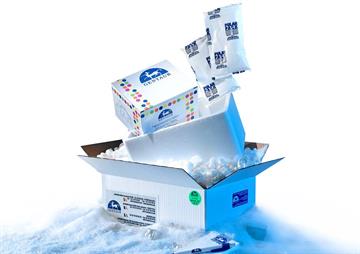
101-M468
Anti-Human IL-1 R6 Antibody
The Interleukin 1 receptor family comprises at least nine members. All family members possess three immunoglobulin (Ig)-like domains in their extracellular region. Most members also have an intracellular TIR (Toll-like receptor/IL-1 receptor) signaling domain that is also conserved in the Toll-like receptor family. A subtype of the IL-1 R family, SIGIRR (single Ig domain-containing IL-1 R-related molecule) differs from the other nine members by having only one Ig domain. IL-1 Rrp2, also known as IL-1 R6, is a transmembrane protein belonging to the IL-1 receptor family. It is a ligand binding subunit that associates with IL-1 RAcP to form a functional receptor complex for IL-1F6, IL-1F8, and IL-1F9.
748.5 €
101-M466
Anti-Human IL-1 R1 Antibody
The Interleukin 1 receptor family comprises at least nine members. All family members possess three immunoglobulin (Ig)-like domains in their extracellular region. Most members also have an intracellular TIR (Toll-like receptor/IL-1 receptor) signaling domain that is also conserved in the Toll-like receptor family. A subtype of the IL-1 R family, SIGIRR (single Ig domain-containing IL-1 R-related molecule) differs from the other nine members by having only one Ig domain. IL-1 R1 is a type I transmembrane glycoprotein that functions as the ligand binding subunit in the IL-1 receptor complex. It associates with a signaling component, IL-1 R3 (IL-1 receptor accessory protein) to form a functional receptor complex for IL-1 alpha and IL-1 beta.
748.5 €
102-P38
Anti-Human IL-8 Antibody
Il-8 or CXCL8 was originally discovered and purified as a neutrophil chemotactic and activating factor. It was also referred to as neutrophil chemotactic factor (NCF), neutrophil activating protein (NAP), monocytederived neutrophil chemotactic factor (MDNCF), T lymphocyte chemotactic factor (TCF), granulocyte chemotactic protein (GCP) and leukocyte adhesion inhibitor (LAI). Many cell types, including monocyte/macrophages, T cells, neutrophils, fibroblasts, endothelial cells, keratinocytes, hepatocytes, chondrocytes, and various tumor cell lines, can produce CXCL8 in response to a wide variety of proinflammatory stimuli such as exposure to IL-1, TNF, LPS, and viruses. CXCL8 is a member of the alpha (CXC) subfamily of chemokines, which also includes platelet factor-4, GRO, and IP10.
518.55 €
101-M04
Anti-Human IL-2 Antibody
Interleukin 2 (IL-2) was initially identified as a T cell growth factor that is produced by T cells following activation by mitogens or antigens. Since then, it has also been shown to stimulate the growth and differentiation of B cells, natural killer (NK) cells, lymphocyte activated killer (LAK) cells, monocytes/macrophages and oligodendrocytes. At the amino acid sequence level, there is approximately 60% - 90% similarity between species. Mature human IL-2 shows 65%, 67%, 72%, 78%, and 64% aa identity to mouse, rat, pig, cat, and cow IL-2, respectively.
520.12 €
101-M05
Anti-Human IL-4 Antibody
Interleukin 4 (IL-4) is a pleiotropic cytokine produced by activated T cells, mast cells, and basophils. It was initially identified as a B cell differentiation factor (BCDF), as well as a B cell stimulatory factor (BSF1). IL-4 has since been shown to have multiple biological effects on hematopoietic and non-hematopoietic cells, including B and T cells, monocytes, macrophages, mast cells, myeloid and erythroid progenitors, fibroblasts, and endothelial cells. Rat, mouse and human IL-4 are species-specific in their activities.
520.12 €
Håll dig uppdaterad! Visa tidigare publikationer

By: Author , 2 Comment
Katalas – ett extraordinärt enzym
30 January 2026

By: Author , 2 Comment
Anaplasmos hos hundar och katter – allt du behöver veta
23 August 2025

By: Author , 2 Comment
Solbränna – hur leker man säkert i solen?
16 August 2025

By: Author , 2 Comment
Biologiska läkemedel – Modernitet inom farmaci
1 August 2025