








Spike (SARS-CoV-2) Pseudotyped VSV Delta G (Luciferase Reporter)
1442.5 EUR
In Stock
quantity
Produktdetaljer
Katalognummer: 421 - 78637-1
Produktkategori: Företag och industri > Vetenskap och laboratorium
Gentaur
Storlek: 100 µl
Parameters
| Additional information | Applications: Screen or titrate neutralizing antibodies against SARS-CoV-2 Spike proteinModel virus entry in Vero-E6, Calu-3, and ACE2-HEK293 cells; |
|---|---|
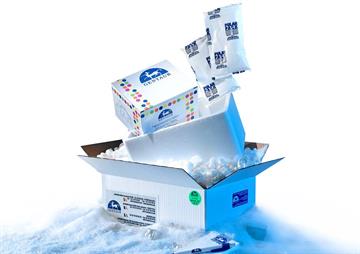
| Storage and shipping | Shipping conditions: -80°C; Storage conditions: The VSV Delta G pseudovirus is shipped with dry ice. For long-term storage, it is recommended to store the virus at -80°C for up to 12 months from date of receipt. Avoid repeated freeze/thaw cycles. Titers can drop significantly with each freeze/thaw cycle.�; |
| Storage and shipping | With |
78637-2
Spike (SARS-CoV-2) Pseudotyped VSV Delta G (Luciferase Reporter)
The Spike (SARS-CoV-2) Pseudotyped VSV Delta G (Luciferase Reporter) was produced with SARS-CoV-2 Spike corresponding to the initial strain (Genbank Accession #QHD43416.1) as the envelope glycoprotein instead of VSV-G. The pseudovirions contain the firefly luciferase gene; therefore, the spike-mediated cell entry can be measured via luciferase activity. The Spike (SARS-CoV-2) Pseudotyped VSV Delta G (Luciferase Reporter) can be used to measure the activity of a neutralizing antibody against SARS-CoV-2 in a Biosafety Level 2 facility.The Spike (SARS-CoV-2) Pseudotyped VSV Delta G (Luciferase Reporter) has been validated for use with target cells Vero-E6, Calu-3, and ACE2-HEK293 (BPS Bioscience #79951). Spike VSV Delta G are preferred for use in cells such as Vero-E6 and Calu-3.The infectivity of VSV-Delta G pseudotypes is restricted to a single round of replication, therefore the pseudotypes can be handled using BSL-2 containment practices.
6142.5 €
78642-1
Spike (D614G) (SARS-CoV-2) Pseudotyped VSV Delta G (Luciferase Reporter)
The Spike (D614G) (SARS-CoV-2) Pseudotyped VSV Delta G (Luciferase Reporter) was produced with SARS-CoV-2 Spike (Genbank Accession #QHD43416.1; with D614G mutation) as the envelope glycoprotein instead of VSV-G. The pseudovirions contain the firefly luciferase gene; therefore, the spike-mediated cell entry can be measured via luciferase activity. The Spike (D614G) (SARS-CoV-2) Pseudotyped VSV Delta G (Luciferase Reporter) can be used to measure the activity of a neutralizing antibody against SARS-CoV-2 D614G variant in a Biosafety Level 2 facility.The Spike (D614G) (SARS-CoV-2) Pseudotyped VSV Delta G (Luciferase Reporter) has been validated for use with target cells Vero-E6 and ACE2-HEK293 (BPS Bioscience #79951). Spike VSV Delta G is preferred over lentiviral-based spike pseudoviruses for use in cells such as Vero-E6 parental cells.
1342.5 €
78642-2
Spike (D614G) (SARS-CoV-2) Pseudotyped VSV Delta G (Luciferase Reporter)
The Spike (D614G) (SARS-CoV-2) Pseudotyped VSV Delta G (Luciferase Reporter) was produced with SARS-CoV-2 Spike (Genbank Accession #QHD43416.1; with D614G mutation) as the envelope glycoprotein instead of VSV-G. The pseudovirions contain the firefly luciferase gene; therefore, the spike-mediated cell entry can be measured via luciferase activity. The Spike (D614G) (SARS-CoV-2) Pseudotyped VSV Delta G (Luciferase Reporter) can be used to measure the activity of a neutralizing antibody against SARS-CoV-2 D614G variant in a Biosafety Level 2 facility.The Spike (D614G) (SARS-CoV-2) Pseudotyped VSV Delta G (Luciferase Reporter) has been validated for use with target cells Vero-E6 and ACE2-HEK293 (BPS Bioscience #79951). Spike VSV Delta G is preferred over lentiviral-based spike pseudoviruses for use in cells such as Vero-E6 parental cells.
6142.5 €
78160-1
Spike (B.1.351 Variant) (SARS-CoV-2) Pseudotyped Lentivirus (eGFP Reporter)
The pandemic coronavirus disease 2019 (COVID-19) is caused by Severe Acute Respiratory Syndrome Coronavirus 2 (SARS-CoV-2). As the first step of the viral replication, the virus attaches to the host cell surface before entering the cell. The viral Spike protein recognizes and attaches to the Angiotensin-Converting Enzyme 2 (ACE2) receptor found on the surface of type I and II pneumocytes, endothelial cells, and ciliated bronchial epithelial cells. Drugs targeting the interaction between the Spike protein and ACE2 may offer protection against the viral infection.<br />A variant called B.1.351 was first identified in the fall of 2020 in the Republic of South Africa. This South African variant, also known as 501Y.V2, has many mutations that may lead to higher transmissibility and infectivity. The Spike (B.1.351 Variant) (SARS-CoV-2) Pseudotyped Lentivirus were produced with SARS-CoV-2 B.1.351 Variant Spike (Genbank Accession #QHD43416.1 with B.1.351 mutations; see below for details) as the envelope glycoproteins instead of the commonly used VSV-G. These pseudovirions contain the enhanced green fluorescent protein (eGFP) gene driven by a CMV promoter, therefore, the spike-mediated cell entry can be determined via eGFP fluorescence. The Spike (B.1.351 Variant) (SARS-CoV-2) Pseudotyped Lentivirus can be used to measure the activity of neutralizing antibody against SARS-CoV-2 (B.1.351) variant in a Biosafety Level 2 facility.
1402.5 €
78160-2
Spike (B.1.351 Variant) (SARS-CoV-2) Pseudotyped Lentivirus (eGFP Reporter)
The pandemic coronavirus disease 2019 (COVID-19) is caused by Severe Acute Respiratory Syndrome Coronavirus 2 (SARS-CoV-2). As the first step of the viral replication, the virus attaches to the host cell surface before entering the cell. The viral Spike protein recognizes and attaches to the Angiotensin-Converting Enzyme 2 (ACE2) receptor found on the surface of type I and II pneumocytes, endothelial cells, and ciliated bronchial epithelial cells. Drugs targeting the interaction between the Spike protein and ACE2 may offer protection against the viral infection.<br />A variant called B.1.351 was first identified in the fall of 2020 in the Republic of South Africa. This South African variant, also known as 501Y.V2, has many mutations that may lead to higher transmissibility and infectivity. The Spike (B.1.351 Variant) (SARS-CoV-2) Pseudotyped Lentivirus were produced with SARS-CoV-2 B.1.351 Variant Spike (Genbank Accession #QHD43416.1 with B.1.351 mutations; see below for details) as the envelope glycoproteins instead of the commonly used VSV-G. These pseudovirions contain the enhanced green fluorescent protein (eGFP) gene driven by a CMV promoter, therefore, the spike-mediated cell entry can be determined via eGFP fluorescence. The Spike (B.1.351 Variant) (SARS-CoV-2) Pseudotyped Lentivirus can be used to measure the activity of neutralizing antibody against SARS-CoV-2 (B.1.351) variant in a Biosafety Level 2 facility.
6442.5 €
78144-1
Spike (P.1 Variant) (SARS-CoV-2) Pseudotyped Lentivirus (Luc Reporter)
In Brazil, a variant called P.1 was first identified in the summer of 2020. This variant has many mutations that may lead to higher transmissibility and infectivity. The Spike (P.1) (SARS-CoV-2) Pseudotyped Lentiviruses were produced with SARS-CoV-2 Variant Spike (Genbank #QHD43416.1 with P.1 mutations (L18F, T20N, P26S, D138Y, R190S, K417T, E484K, N501Y, D614G, H655Y, T1027I) as the envelope glycoproteins instead of the commonly used VSVG. These pseudovirions contain the firefly luciferase gene driven by a CMV promoter, therefore, the spike-mediated cell entry can be measured via luciferase activity. The Spike (P.1) (SARS-CoV-2) pseudotyped lentivirus can be used to measure the activity of neutralizing antibody against SARS-CoV-2 (P.1) variant using a Biosafety Level 2 facility._x000D_
1402.5 €
Håll dig uppdaterad! Visa tidigare publikationer

By: Author , 2 Comment
Katalas – ett extraordinärt enzym
30 January 2026

By: Author , 2 Comment
Anaplasmos hos hundar och katter – allt du behöver veta
23 August 2025

By: Author , 2 Comment
Solbränna – hur leker man säkert i solen?
16 August 2025

By: Author , 2 Comment
Biologiska läkemedel – Modernitet inom farmaci
1 August 2025